.png "Recosport Europe")
- Elastic Bandages
- Kinesiology Tapes
- Sports adhesive tapes – sports plaster and sports tape
- Supplements
-
Sports Accessories
- Professional massage creams and oils for therapists
- Coolers
- Medical Bags
- BLAZEPOD
- Sports Recovery
-
Equipment
- Goals, Nets and Accessories
- Aluminum transport crates
- Fitness Equipment and Accessories
- Home
- New Products
- Manufacturers
- Contact








Creatine
Creatine is a natural organic compound, synthesized in the liver, kidneys, and pancreas from three amino acids (arginine, glycine, methionine). In the human body, about 95% of creatine is stored in muscles in the form of phosphocreatine. Here, creatine acts as a quick energy reserve: phosphocreatine regenerates ATP (adenosine triphosphate) molecules, the immediate energy source of muscle cells. In other words, when you perform very intense exercises (like lifting weights or sprinting), creatine allows muscles to produce additional ATP, supporting strong and sustained contractions. Although it is produced by the body and found in foods (meat, fish, milk), the naturally obtained amount (1–2 g/day) may be insufficient for athletes, which is why many turn to external supplementation.
Why take creatine: benefits for strength, muscle volume, energy, recovery
Increased strength and performance: Creatine is considered the most effective supplement for improving performance in short-term, high-intensity efforts. Numerous studies show that creatine supplementation significantly increases maximal strength and workout capacity during intense training. Practically, you get extra energy for 1–2 more reps per exercise, speeding up gym progress.
Greater muscle mass and volume: In the first days of supplementation, creatine draws water inside muscle fibers, giving them volume and a “full” look. This cell volumization creates the impression of larger muscle mass and can indirectly stimulate fiber growth. In the long run, proper creatine intake combined with strength training accelerates hypertrophy (muscle mass growth).
Energy and inter-set endurance: Since muscle creatine stores resynthesize quickly, creatine ensures a constant ATP supply during sets. This way, you fatigue more slowly in repeated efforts and enjoy more efficient anaerobic bouts. With creatine, you can sustain high-intensity workouts for longer.
Improved muscle recovery: Creatine helps reduce post-workout muscle inflammation and repair damaged tissue faster. Thus, muscles recover quicker between sessions, and muscle soreness is often reduced. In summary, creatine lets you train more frequently and at higher intensity, supporting progress.
Creatine is safe for most people when taken in recommended doses. Generally, no serious side effects occur if you follow the proper dosage.
When and how to properly take creatine
Timing: Research shows that post-workout creatine intake is more efficiently absorbed by muscles due to their heightened nutrient sensitivity immediately after exercise. It’s also helpful to take creatine with a meal or a carb- and protein-rich shake, since higher insulin supports creatine transport into muscles.
Recommended dose: Typically, 3–5 g per day (about 1 teaspoon). For faster results, you can start with a loading phase: 20–25 g/day (split into 4–5 servings of 5 g each) for 5–7 days. Then continue with the maintenance dose (3–5 g/day). After loading, muscle creatine levels remain high with 3–5 g/day.
Consistency and hydration: Daily use is important, even on rest days. On non-training days you can take creatine in the morning or evening at the same time to maintain constant levels. For best absorption, dissolve creatine in at least 200–300 ml water (or juice); ideally ~100 ml water per gram of creatine. Good hydration prevents cramps and supports creatine’s function in muscles.
With or without breaks: Creatine should be taken daily, not just around workouts. Continuous supplementation keeps your muscles saturated.
Types of creatine: monohydrate, Creapure, HCl, etc. – differences and recommendations
Creatine monohydrate – the classic form, most researched and proven effective. It’s cheap and well tolerated. Standard monohydrate (3.3 kcal/g) is also available in micronized form – very fine particles that dissolve easily in water. It’s the basic choice for anyone starting supplementation.
Creapure® – a registered trademark of pure creatine monohydrate, manufactured in Germany. Considered one of the purest and highest quality forms available. If you want guaranteed creatine free of impurities, Creapure is the premium choice. Z-Konzept often uses Creapure in its products.
Creatine HCl (hydrochloride): Creatine bound to hydrochloric acid, making it much more water-soluble. Some users take smaller doses (1–2 g) compared to 3–5 g of monohydrate, with less water retention/bloating. However, studies don’t show clear superiority over monohydrate.
Buffered creatine (Kre-Alkalyn): An “alkalized” form at higher pH to prevent early breakdown in the stomach. Claimed to be more stable and gentler on digestion, but evidence is limited.
Other forms: Citrate, malate, creatine ethyl ester (CEE), or creatine blends. These may offer different solubility or theoretical benefits, but monohydrate (especially Creapure) remains the gold standard supported by the most research. Choice depends on budget and personal preference, but for most users, monohydrate is enough.
Myths and facts about creatine
-
Myth: “Creatine makes you bloated with water.”
Fact: Creatine draws water inside muscle cells, not under the skin. Muscles look fuller, but it doesn’t cause unattractive subcutaneous water retention. -
Myth: “Creatine damages kidneys.”
Fact: Studies in healthy athletes show no harmful effects on kidney function. Unless you have preexisting kidney issues and you follow the recommended dose, creatine is not dangerous. A temporary rise in serum creatinine (a lab marker) is normal and does not indicate kidney damage. -
Myth: “Creatine has many severe side effects.”
Fact: Taken correctly (3–5 g/day), creatine is generally safe and well tolerated. It’s not known to cause liver injury, hypertension, or cancer. Minor digestive discomfort may occur in sensitive people, but usually resolves by adjusting dose or timing.
Z-Konzept – German sports nutrition quality
Z-Konzept is a German sports nutrition brand recognized for quality and innovation. Its founder, a food chemist and former athlete, states that “only the best is good enough” for products carrying his name. The brand collaborates with top athletes and anti-doping test centers to ensure supplements are effective and clean.
For example, Z-Konzept 100% Creatine Powder (300 g) uses pure creatine monohydrate and states: “Creatine is the most researched and evaluated supplement… [that] increases physical performance in short bursts of high-intensity exercise.” The taste is neutral (no artificial flavors), and the powder dissolves easily in water, offering a pleasant consumption experience.
Z-Konzept focuses on both efficiency (precise dosages, advanced formulas) and ingredient quality. Packaging includes clear usage instructions and dosage recommendations – e.g., Z-Konzept suggests 3.4 g (about 1 teaspoon) creatine monohydrate dissolved in water, preferably before training. By choosing Z-Konzept creatine, you benefit from German scientific know-how and professional trust.
Recommendations for choosing the right creatine (beginners vs advanced, powder vs tablets)
Beginners: Start with simple, proven creatine monohydrate (ideally Creapure). Begin with 3–5 g/day and monitor your body’s response. No need for immediate loading; maintenance dose alone works well. Powder is usually best – cheap, easy to measure, and mix in shakes. Example: Z-Konzept 100% Creatine Powder (one serving = 3.4 g creatine in water).
Advanced users: Experienced athletes can also rely on monohydrate as a base but may use loading phases for quicker saturation or try alternative forms (e.g., HCl) if they experience digestive issues. For competitions with strict weight categories, HCl may be preferable (smaller doses, less water retention). There’s no “magic” creatine – all serious forms raise muscle creatine levels and bring benefits. Choose based on tolerance and budget.
Powder vs tablets: Powder is flexible, dissolves quickly, and is cheaper per gram. Tablets/capsules offer fixed dosage and convenience (easy to take anywhere), but are pricier and require extra water. Example: Z-Konzept also sells CreaFAST – concentrated creatine HCl tablets, for those preferring capsules. For most users, powder remains the standard choice. In both cases, follow instructions (~5 g/day total) and stay well hydrated.
Frequently Asked Questions (FAQ)
Which type of creatine is most effective?
Creatine monohydrate (especially Creapure®) is the most proven and effective form. Clinical studies show significant strength and muscle mass increases with monohydrate. Other forms (HCl, buffered, citrate, etc.) may offer specific advantages (solubility, lower doses), but none are clearly superior to monohydrate. Creapure is a top option for certified purity.
Does creatine cause water retention?
Yes, but inside muscles, not under the skin. This gives a fuller muscle look rather than general bloating. With a clean diet, the visible effect is muscle volume, not swelling.
Should I take creatine on rest days?
Yes, supplementation should be daily, regardless of training. A constant intake (e.g., 5 g daily at the same time) keeps muscle creatine levels high. On rest days you can take it earlier or later (many prefer evenings), but the key is not to skip doses.

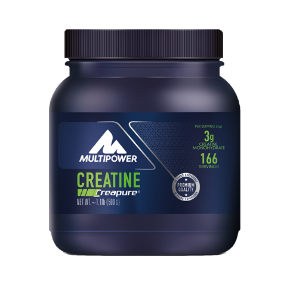
Pure Creatine 500g (Creapure®) - Multipower

100% Creatine Powder 300g Z-KONZEPT


Creatine Monohydrate 5000 mg - 250g Benefit

CREATINE POWDER 500G BODY ATTACK

Creatine 100% Powder - 300g Body Attack


.png)


